
September 24, 2026
Updated by the Velox team
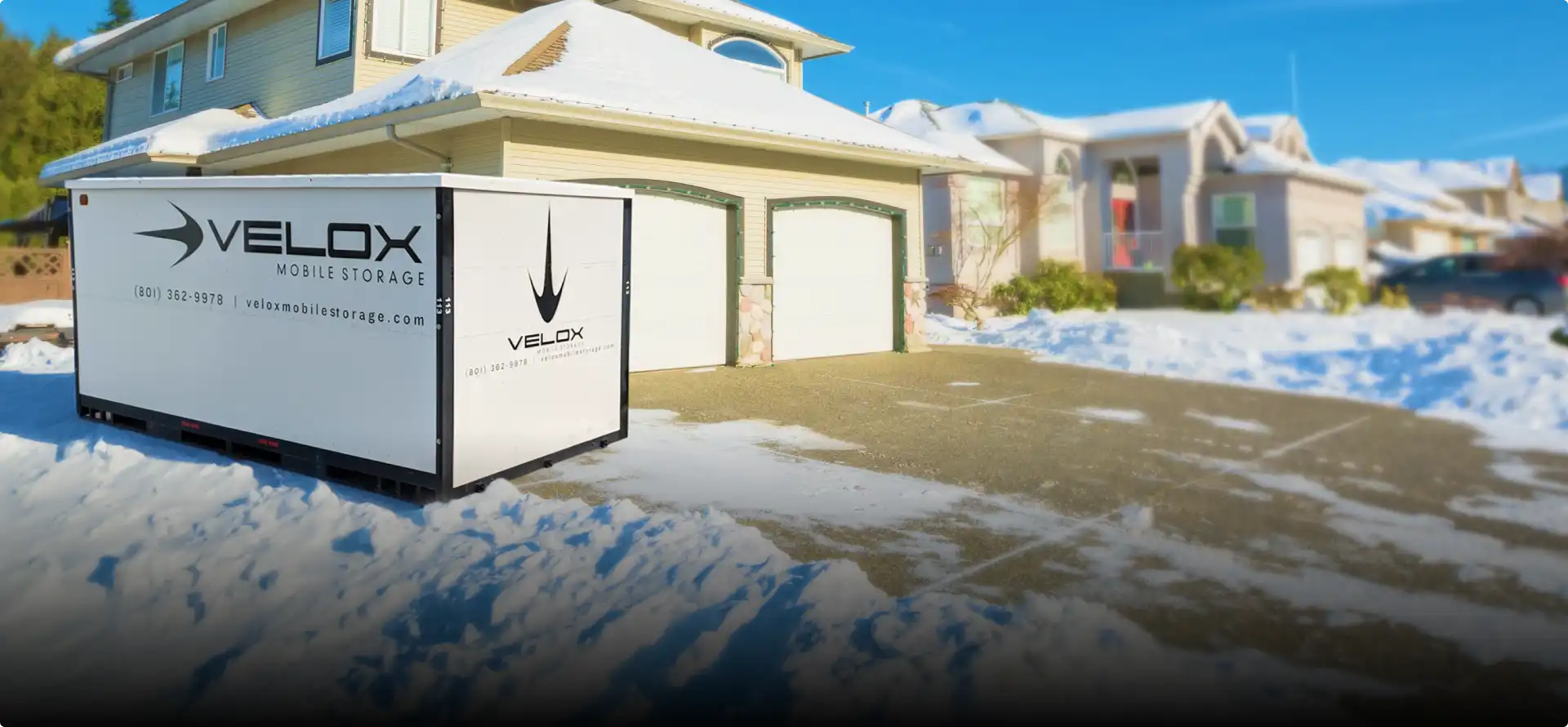
Yes. In most driveways across Utah and Colorado’s Front Range we can set a container right where you want it, using about one parking stall. Our truck stays on the road and a machine lifts the unit off and sets it down, so it is never tipped or dragged like a dumpster.
Not sure about your spot? See if the container fits in your driveway in 3D before delivery day.
How does the container actually get into my driveway?
This is the part that surprises people. The truck never pulls onto your property. It parks on the street, and a machine lifts the container off the truck, carries it up the driveway, and sets it down level wherever a truck could drive. The unit takes up about one parking stall.
It is not tipped off the back or dragged into place like a roll-off dumpster. That’s a common wrong assumption, and it’s why people worry about their driveway. The container is picked up and set down.
Before delivery, clear the spot of cars and check for low branches and overhead wires along the path from the street. Our prepare for delivery page has the short checklist.
Do I need to be home when it’s delivered?
Not if your placement instructions are clear. Tell us where you want it, which way you want the doors to face, and anything unusual about the spot, and the driver will set it while you’re at work. The driver contacts you before arrival either way.
If the spot is tight or unusual, be there. Ten minutes of pointing beats a container in the wrong place.
The easiest way to book placement is to text us a photo of the spot. We look at the width, the slope, what’s overhead, and what’s underfoot, and we tell you yes, no, or “move the trailer and it’s fine.”
Will it damage my driveway, and what surfaces work?
Concrete and asphalt are ideal. Compacted gravel, crushed rock, dirt, and grass are all fine as long as the ground is firm, level, and dry. Pavers are possible with care, so tell us if that’s what you’ve got.
What matters most is what’s under the surface. One delivery, the customer told us the spot was a cement pad. Our machine sank two feet into what turned out to be a home-dug septic area underneath it, unmarked. Nobody had a good afternoon. If there’s a septic tank, a drain field, a cistern, or anything hollow under the spot, tell us before we roll up.
What if my driveway is sloped or narrow?
Send a photo. Some competitors flat-out refuse steep driveways. We look at each one and decide case by case. Sometimes the answer is yes, and sometimes it’s “let’s put it on the flat part by the garage instead.”
Narrow driveways are usually about the path, not the pad. If the machine can get from the street to the spot without hitting a branch, a fence post, or a wire, it can set the container there.
Do I need a permit or HOA approval?
It depends on where you live, and this is worth five minutes of checking before delivery day.
HOAs vary. Read your covenants or call the management company before delivery day. City code is only half the answer, and HOA rules can be stricter.
Cities usually only act on a complaint. In our experience, a container in a driveway doesn’t draw attention from the city unless a neighbor complains, and when that happens a permit usually fixes it. There are two Utah County exceptions worth knowing:
- Orem city code doesn’t allow storage containers on residential lots. If you’re in Orem, talk to us first. The usual plan is a short load window, then we take the unit to our yard and store it there until you need it.
- Provo allows one container per lot for 30 days in any 12-month period, in the driveway but not in the street.
We’ve written up the Utah County cities in the Utah County permit guide, and the Denver rules in the Denver permit guide. If your city isn’t covered, call us and we’ll tell you what we know.
Can I put it in the garage instead?
Yes, if it fits. This is a winter trick our customers with big garages figured out. We set the container inside the garage, and they load it warm and dry over a few evenings instead of hauling boxes through snow. When they’re ready, we pull it out and take it away.
The container keeps out normal rain and snow on its own. It’s welded steel with gaskets on the doors. But loading in a heated garage in January is a lot more pleasant than loading in a driveway, and your boxes go in dry.
If the garage isn’t an option, clear the snow off the spot and the path from the street so the ground is firm and level for the machine.
For the full picture of delivery, storage, and pickup, see how it works.
Questions people ask
Does the delivery truck drive on my driveway?
No. The truck stays on the road. A machine lifts the container off and carries it to the spot, so it’s set down, not tipped or dragged.
Do I have to be home for delivery?
Not if your instructions are clear. The driver contacts you before arrival. If the spot is tight or unusual, plan to be there.
Can the container sit on gravel or grass?
Yes, as long as the surface is firm, level, and dry. Concrete and asphalt are ideal, and pavers work with care. Tell us about anything under the surface, like a septic tank or drain field.
Can you deliver to a sloped driveway?
It depends on the slope. We decide case by case rather than refusing steep driveways outright. Text us a photo and we’ll tell you.
Do I need a permit to put a storage container in my driveway?
Often not, but check. Cities usually only act on a complaint, and a permit typically fixes it. Orem doesn’t allow containers on residential lots and Provo limits you to one container for 30 days per year, so check our permit guides and your HOA rules first.
Ready when you are
Wondering if your driveway works? Text a photo of the spot to (801) 362-9978 in Utah or (720) 674-8777 in Colorado, or call, and we’ll tell you before you book.