
September 24, 2026
Updated by the Velox team
Almost every call we get includes some version of the same question: where can the storage container actually go? Driveway, street, gravel, slope, grass, inside the garage? Here’s how we answer it, with the rules of thumb we use on every delivery in Utah and Colorado.
Want to see it before you book? Our Will It Fit tool lets you drag the 16 ft container around a 3D driveway, RV pad, street or parking stall.
How the container gets placed
Our truck stays on the street. A specialized machine lifts the 8×16 container off the truck and sets it down exactly where you want it. The container is never tipped, rolled or dragged off a trailer like a dumpster, which is why we can put it in places other companies decline. It takes up about one parking stall.

The driveway (best option)
Concrete or asphalt is ideal: firm, level, and easy for us to get to. Clear the driveway of cars, low branches and overhead wires before we arrive. A standard two-car driveway fits the container with room to open the doors. Damage is very unlikely on a driveway in normal condition; if yours is decorative pavers or freshly poured, tell us and we’ll pick the best spot.
Sloped driveways
Some national companies won’t deliver to a steep driveway at all. We handle them case by case. Text us a photo taken from the street and we’ll tell you before delivery day whether it works and where the container will sit.
Gravel, dirt, grass and pavers
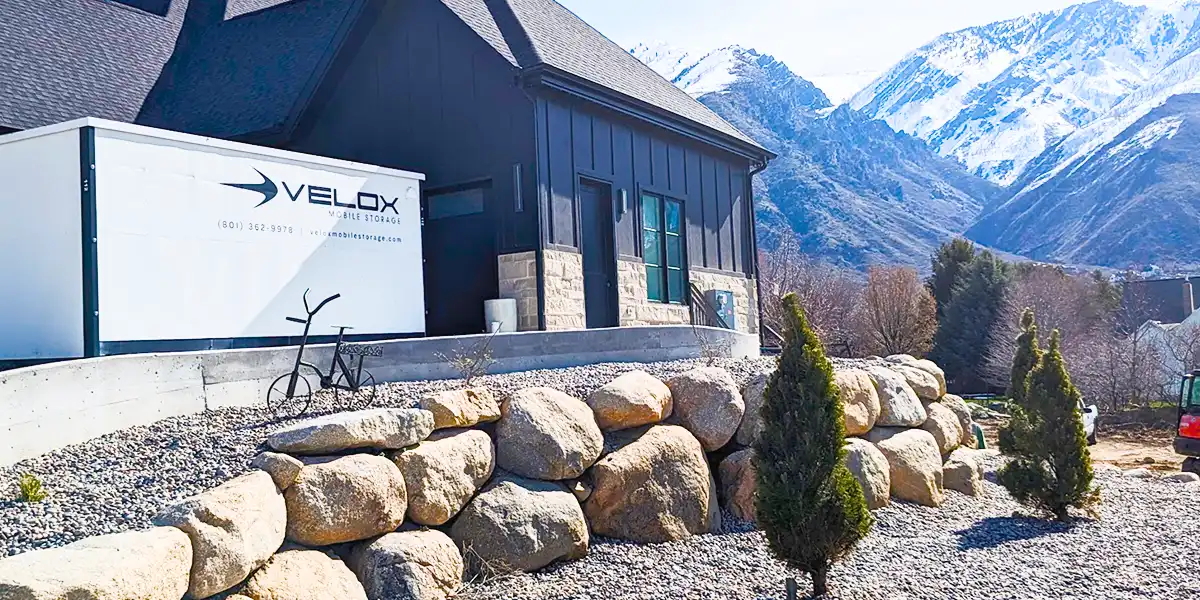
All workable if the ground is firm, level and dry. Compacted gravel and crushed rock are fine. Dirt at a new build is fine once it’s dry and packed. Grass works when it’s firm; a soggy lawn in April is not the day. Pavers are possible with care. When in doubt, send the photo.
On the street
Often yes. Most cities don’t actively police a container at the curb unless a neighbor complains, and when that happens a short-term permit usually clears it up. The driveway is always the safer choice if you have one. See our Utah County permit guide for city-by-city notes, or the Denver permit guide if you’re on the Front Range.
HOAs
Every HOA is different. Some don’t care; some want to approve everything. Ask before delivery and get the answer in writing. If your HOA limits how long a container can sit out, we can store it at our gated yard for the same monthly rate and bring it back when you need it.
Inside the garage (yes, really)
Every winter a few customers with big garages have us set the container inside so they can close the door and load in the warmth. If your garage has the height and depth, it’s a great option. We’ve also placed containers on job sites, behind businesses, on a gravel pad at the top of a mountain ridge, and across a high school football field during a rebuild.
Job sites and new builds
Contractors and families building a home ask about placement more than anyone, because the ground changes week to week. On a new build, packed dirt or a gravel pad works once it’s dry; fresh landscaping does not. Some builders ask families to keep the driveway clear until final grading, so we hold the loaded container at our gated yard, which adds nothing to the monthly rate, and deliver it the week you get keys. Restoration crews usually want the container as close to the door as possible, so tell us which door. There’s more on long holds in our home-build storage guide and on the construction storage page.
Spots to avoid
A few places we’ll steer you away from: a soft or freshly watered lawn, ground over a septic tank or drain field (please mark it; an unmarked, home-built septic area once swallowed our machine two feet deep on what looked like a solid pad), spots under low power lines, and anywhere the truck can’t get a straight approach. If one of these is your only option, call and we’ll talk through alternatives, including keeping the container at our yard until the spot is ready.
What the machine needs from you
- A clear path from the street to the spot, wide enough for a pickup truck.
- No cars parked in the way, no low branches, no wires across the path.
- Firm ground. If the machine will sink, it will tell us before it tells you.
- A photo, if anything about the spot is unusual. It’s the easiest way to book placement.
Do you need to be home?
No, as long as we have clear placement instructions and access. Our driver will contact you before arrival. If the spot is tight, it helps to be there or to have sent photos ahead of time.
Placement questions we hear most
Will it damage my driveway?
It’s rarely a problem. The container is set down gently by a machine, not dropped or dragged. Tell us about pavers or fresh concrete and we’ll plan around them.
Can you put it on a sloped driveway?
Usually. Send a photo from the street and we’ll confirm before delivery day.
Can the container sit on grass?
Yes, if the ground is firm and dry.
Do I need a permit?
On your own driveway, almost never. On the street, it depends on the city, and most only act on a complaint.
How much room does the truck need?
The container takes about one parking stall. Our machine can place it anywhere a pickup truck could drive.
Still not sure about your spot? Text a photo to 801-362-9978 in Utah or 720-674-8777 in Colorado, or request a quote. More answers in our FAQ and how it works.