
July 1, 2026
Updated by the Velox team
To prevent mold in a portable storage container, load only dry items, pack moisture-sensitive things in sealed plastic totes with moisture absorbers, leave air gaps between boxes and the walls, and set the container on a level, well-drained spot. The rest of this guide walks through each step for Utah’s seasons.
You’ve packed your belongings carefully into your portable storage container. Everything’s organized, labeled, and ready for however long you need to store it. Then a worry creeps in: what if moisture gets inside? What if mold starts growing on your furniture, clothes, or boxes while everything sits in storage?
It’s a legitimate concern. Mold and moisture damage can ruin belongings and create problems that are expensive and frustrating to fix. The good news is that with some basic precautions and smart packing strategies, you can prevent mold in your storage unit and keep everything dry and protected.
Utah’s climate brings its own challenges. Hot, dry summers. Cold winters with snow. Temperature swings that create condensation. Understanding how moisture problems develop and how to prevent them means your belongings come out of storage in the same condition they went in.
Here’s what you need to know about moisture control in storage containers and keeping mold from ever becoming an issue.
Understanding How Moisture Problems Start
Mold needs three things to grow: moisture, organic material to feed on, and the right temperature range. Your stored belongings provide plenty of organic material in the form of fabric, wood, paper, and cardboard. Temperature inside a storage container will naturally vary with seasons, creating conditions mold can tolerate.
That leaves moisture as the factor you can control. Keep moisture levels low, and mold can’t establish itself no matter how long items stay in storage.
Moisture gets into portable storage units several ways. It can come from the outside if the container isn’t properly sealed. It can come from the items themselves if you pack things that are damp or wet. And it can develop from condensation when temperature changes cause humidity in the air to turn into water droplets on surfaces.
Preventing each of these moisture sources is simpler than dealing with mold damage after it happens.
Start with a Quality Container
Not all portable storage containers are created equal when it comes to moisture protection. The container itself is your first line of defense against external moisture.
Velox uses all-steel containers built to keep out normal rain, snow, and ground moisture. They are not climate controlled, which is exactly why the packing steps below matter. Proper sealing around doors and seams prevents water from sneaking in during storms or when snow melts.
The container should sit on a level, stable surface with good drainage. Water pooling underneath or around the container can eventually find its way inside through small gaps or by creating humidity that affects the interior.
Before loading anything, inspect your storage unit for obvious gaps, holes, or damage. Most quality containers won’t have these issues, but checking takes just a few minutes and provides peace of mind.
If you’re keeping the container at your home, position it where water naturally drains away rather than toward or under it – our driver sets the container exactly where you ask, so pick the spot with drainage in mind (see how delivery works). Slightly elevated placement on gravel, pavers, or a concrete pad works better than setting it directly on grass or dirt that stays damp.
Never Pack Damp or Wet Items
This seems obvious, but it’s one of the most common ways moisture problems start. Packing items before they’re completely dry introduces moisture directly into your storage container, where it has nowhere to go.
Furniture that’s been cleaned should be thoroughly dry before packing. Give upholstered items extra time to air out completely. Wipe down hard surfaces and let them dry.
Clothing and linens absolutely must be dry. Even slightly damp fabrics packed into boxes will develop mildew and mold quickly. If you’re packing after washing items, make sure they’ve had plenty of time to dry completely, not just mostly dry.
Appliances like refrigerators, washing machines, and dishwashers hold moisture in places you might not see. Clean them thoroughly and leave doors open for several days before moving them into storage. Wipe down interiors one final time right before packing.
Outdoor furniture and equipment that’s been exposed to rain or snow needs to dry completely. Bring items inside or under cover for a few days before packing if they’ve been sitting outside.
Taking the time to ensure everything is dry before it goes into your portable storage unit prevents most moisture problems before they start.
Use Moisture Absorbers Inside the Container
Even with dry items and a sealed container, some moisture will be present in the air. Using moisture absorbers inside your storage unit helps control humidity levels and prevents condensation.
Desiccant products like silica gel packets or moisture-absorbing crystals are inexpensive and effective. Place several throughout the container, especially near items particularly vulnerable to moisture damage like books, documents, or fabric.
Larger moisture absorber products designed for closets or basements work well in storage containers. These typically use calcium chloride crystals that pull moisture from the air and trap it in a collection chamber.
Replace or refresh moisture absorbers periodically if your storage timeline extends for months. They have limited capacity and eventually become saturated. If you have access to your container, checking and replacing them every few months provides ongoing protection.
Some people use charcoal or baking soda as natural moisture absorbers. While these help somewhat, they’re not as effective as products specifically designed for moisture control. If you’re storing valuable or moisture-sensitive items, invest in proper moisture absorbers.
Pack Smart to Allow Air Circulation
How you pack items inside your portable storage container affects moisture control. Tight packing with no air circulation creates pockets where moisture can accumulate and cause problems.
Leave small gaps between boxes and items when possible. Air circulation helps equalize temperature and humidity throughout the container, preventing moisture from concentrating in one area.
Don’t pack items directly against the container walls. A few inches of space allows air to move and prevents condensation on the walls from affecting your belongings.
Avoid covering the entire floor with items packed edge to edge. Creating pathways or leaving some floor space uncovered improves overall air circulation.
Stack boxes so air can flow between them rather than creating solid, impenetrable walls of cardboard. Even in an 8×16 Velox container, a narrow gap down one side keeps air moving from the doors to the back wall.
Better circulation means more stable conditions throughout the container and less opportunity for moisture to accumulate and cause damage.
Choose Packing Materials Wisely
The materials you use to pack and protect items affect moisture control. Some materials trap moisture, while others allow it to breathe and dissipate.
Cardboard boxes are standard for packing, but they can absorb and hold moisture. If you’re concerned about moisture, consider using plastic bins with tight-fitting lids for particularly vulnerable items. These create a secondary moisture barrier that protects contents even if humidity increases in the container.
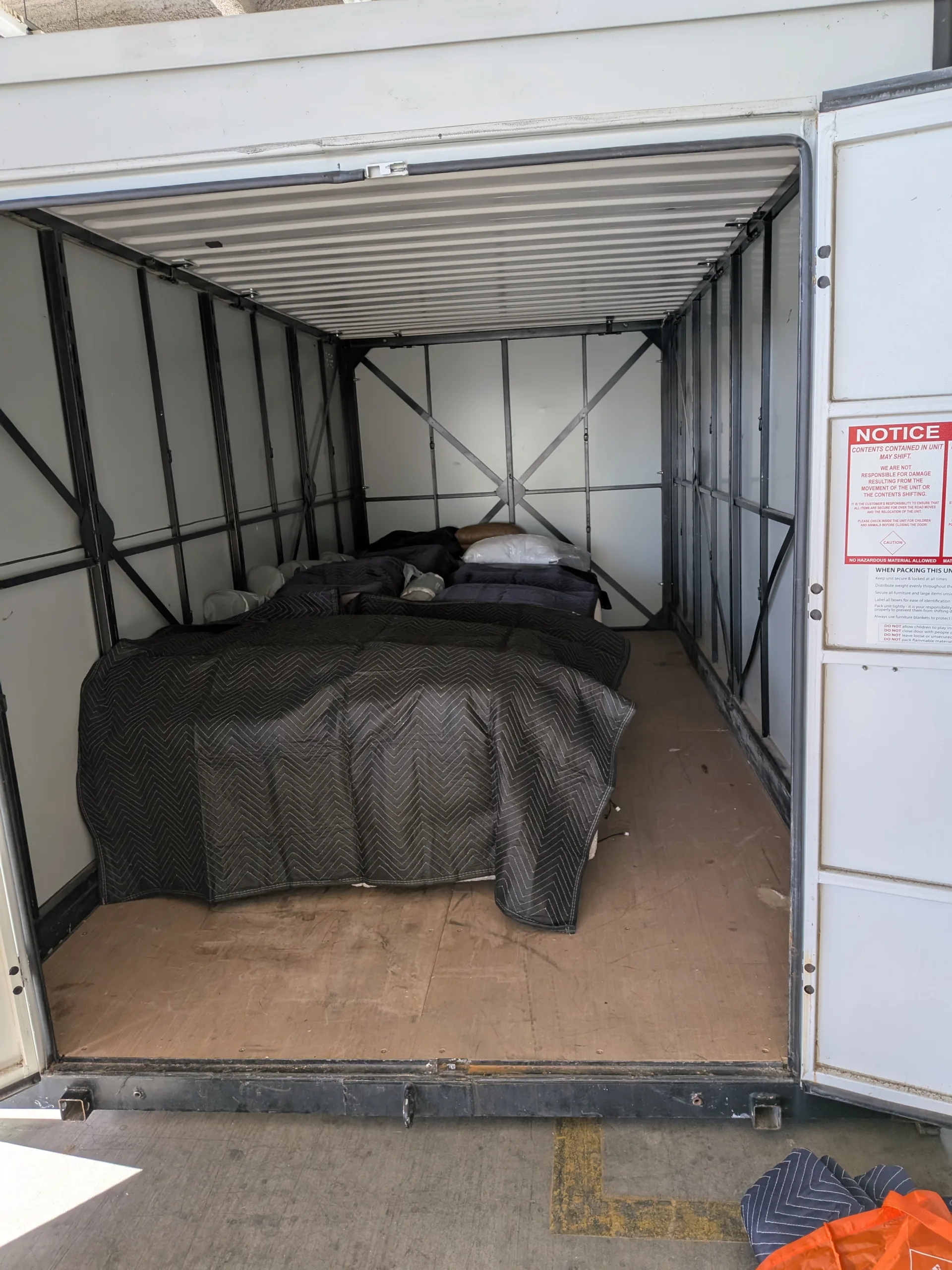
For furniture and large items, breathable covers work better than plastic tarps. Plastic traps moisture against surfaces, which can cause more problems than it solves. Furniture blankets or breathable fabric covers protect from dust while allowing air circulation.
Avoid using newspaper for packing fragile items if moisture is a concern. Newspaper absorbs moisture readily and the ink can transfer to items when damp. Use plain packing paper or bubble wrap instead.
Wrap moisture-sensitive items individually. Books, documents, electronics, and anything else particularly vulnerable to moisture damage should be wrapped in protective materials and packed carefully.
For clothing and fabrics, vacuum-sealed bags seem like a good moisture barrier, but they can trap any existing moisture inside with the fabric. Use them only for items you’re certain are completely dry, and consider adding small moisture absorbers inside the bags before sealing.
Protect Items Most Vulnerable to Moisture
Some belongings are more susceptible to moisture damage than others. These items deserve extra attention when packing for portable storage.
Wood furniture can warp, crack, or develop mold when exposed to moisture. Clean and dry furniture thoroughly before storage. Consider treating wood surfaces with furniture polish or protective coating that adds a moisture barrier.
Upholstered furniture is particularly vulnerable. Fabric absorbs moisture and provides an ideal environment for mold growth. Make sure upholstered items are completely dry and consider using moisture absorbers placed directly on or near these pieces.
Mattresses and box springs should be wrapped in breathable mattress bags that protect from dust while allowing moisture to escape. Never wrap mattresses in plastic tarps or non-breathable materials.
Books and paper documents absorb moisture readily. Pack them in plastic bins rather than cardboard boxes if possible. Add moisture absorbers to containers holding paper items.
Electronics should be packed in their original boxes when possible, with moisture absorbers added to the boxes. Wipe down electronics to remove any fingerprints or residue that could attract moisture.
Leather items like furniture, jackets, or shoes need special care. Clean leather thoroughly and treat it with leather conditioner before storage. Pack leather items where air can circulate around them rather than sealed in plastic.
Metal items can rust when exposed to moisture. Clean and dry metal thoroughly, then consider applying a light coat of oil or rust inhibitor to surfaces before packing.
Monitor Storage Conditions When Possible
If you’re keeping your portable storage container at your home, periodic monitoring helps catch potential moisture problems before they cause damage.
Check inside the container every few weeks, especially during seasons with high humidity or significant temperature changes. Look for signs of condensation on walls or items, musty odors, or visible moisture.
Feel boxes and fabric items for dampness. Cardboard that feels soft or limp may be absorbing moisture. Fabric that feels damp or smells musty indicates a moisture problem developing.
Replace moisture absorbers if they’re saturated. These products visibly change when they’ve absorbed all they can hold, making it obvious when they need replacing.
If you notice moisture issues developing, increase air circulation by rearranging items to create more space between them. Add additional moisture absorbers. If specific items are getting damp, remove them from the container to dry out completely before repacking.
For containers stored at a Velox facility, schedule periodic access if you’re concerned about moisture-sensitive items. We’ll work with you to check on belongings and make any necessary adjustments during longer storage periods.
Seasonal Considerations for Utah Storage
Utah’s climate creates specific moisture challenges that vary by season. Understanding these helps you prepare appropriately, and if you are rotating holiday decor or summer gear in and out, our seasonal storage guide covers what to pack when.
Summer heat rarely causes moisture problems directly, but temperature swings between hot days and cool nights can create condensation inside storage containers. This is most common in late summer and early fall when temperature variations are greatest.
Winter brings snow and cold temperatures. Snow accumulation around containers can increase humidity levels inside as temperatures fluctuate. Containers sitting directly on ground that freezes and thaws repeatedly may experience more moisture issues than those on elevated, well-drained surfaces.
Spring snowmelt creates wet conditions that can affect containers not properly positioned for drainage. Make sure water flows away from rather than toward or under your storage unit.
Fall sees the return of cooler, sometimes damp weather after summer’s heat. This transition period is when condensation is most likely to form inside containers as air temperature drops faster than the temperature of items inside.
Being aware of seasonal challenges helps you time moisture-control efforts appropriately and check on stored items during periods when problems are most likely to develop.
What to Do If You Find Mold
Despite best efforts, sometimes mold develops in storage. Catching it early and addressing it quickly prevents minor problems from becoming major ones.
If you find mold on items in your portable storage container, remove affected items immediately. Don’t try to clean mold while items are still packed in with other belongings, as spores can spread.
Take moldy items outside to clean them. Brush off loose mold outdoors where spores won’t contaminate your home or other belongings. Clean surfaces with appropriate cleaning solutions for the material type.
Items with extensive mold damage, especially porous materials like fabric, upholstery, or paper, may not be salvageable. Mold that’s penetrated deeply into materials can’t be fully removed and will return.
Once you’ve removed affected items, address the moisture source in your storage unit. Add or replace moisture absorbers. Improve air circulation. Check for container damage that might be letting moisture in.
Let the container air out completely before repacking. Wipe down any surfaces that had contact with moldy items. Make sure everything is thoroughly dry before loading items back in.
Storage Duration and Moisture Control
The longer items stay in portable storage, the more important moisture control becomes. Short-term storage of a few weeks requires less aggressive moisture prevention than storage lasting months or years.
For storage beyond a month or two, invest in quality moisture absorbers and check them regularly. Consider using plastic bins instead of cardboard boxes for longer storage periods.
Items stored long-term should be packed with extra protection. Double-wrap moisture-sensitive items. Use higher-quality packing materials. Create better air circulation.
If you’re planning very long-term storage, plan on sealed plastic totes, fresh moisture absorbers and a well-drained spot – a Velox container keeps out normal rain and snow but is not climate controlled – and keep documents, electronics, art and antiques with you instead.
Your Belongings Deserve Protection
Preventing moisture and mold in your portable storage unit isn’t complicated, but it does require some attention to detail and smart packing choices. The effort you put into moisture control when loading your container pays off when everything comes out dry and undamaged months later.
Velox storage containers are built to keep normal rain and snow out, and we’re happy to answer questions about protecting your specific belongings during storage. We’ve helped countless Utah families store items safely through every season and situation.
Click here for a free, no-obligation quote, or call us at 801-362-9978 to discuss your storage needs and any concerns about keeping belongings protected. We’ll help you understand what precautions make sense for your situation and storage timeline.
Because your belongings matter, and they deserve storage that keeps them safe.
Mold and moisture FAQ
Is a Velox portable storage container climate controlled?
No. Velox containers are all-steel and keep out normal rain and snow, but the inside follows the outdoor temperature. Load everything dry, use sealed totes and moisture absorbers, and keep documents, electronics, art and antiques with you.
What should I put in the container to absorb moisture?
Silica gel packets near books, fabric and paper, plus one or two larger calcium chloride absorbers (the closet or basement type) placed by the doors and at the back wall. Swap them out every few months on a longer stay; if the container is stored at our yard, you can visit by appointment to do it.
What should never go into long-term storage?
Anything irreplaceable or moisture-sensitive – important documents, photos, electronics, artwork, antiques and instruments – and anything hazardous or perishable, such as gasoline, propane, fireworks, chemicals and food. See our full list of what not to put in a container.
Related reading: How to Prepare for Your Portable Storage Delivery
FAQs