
Updated by the Velox team
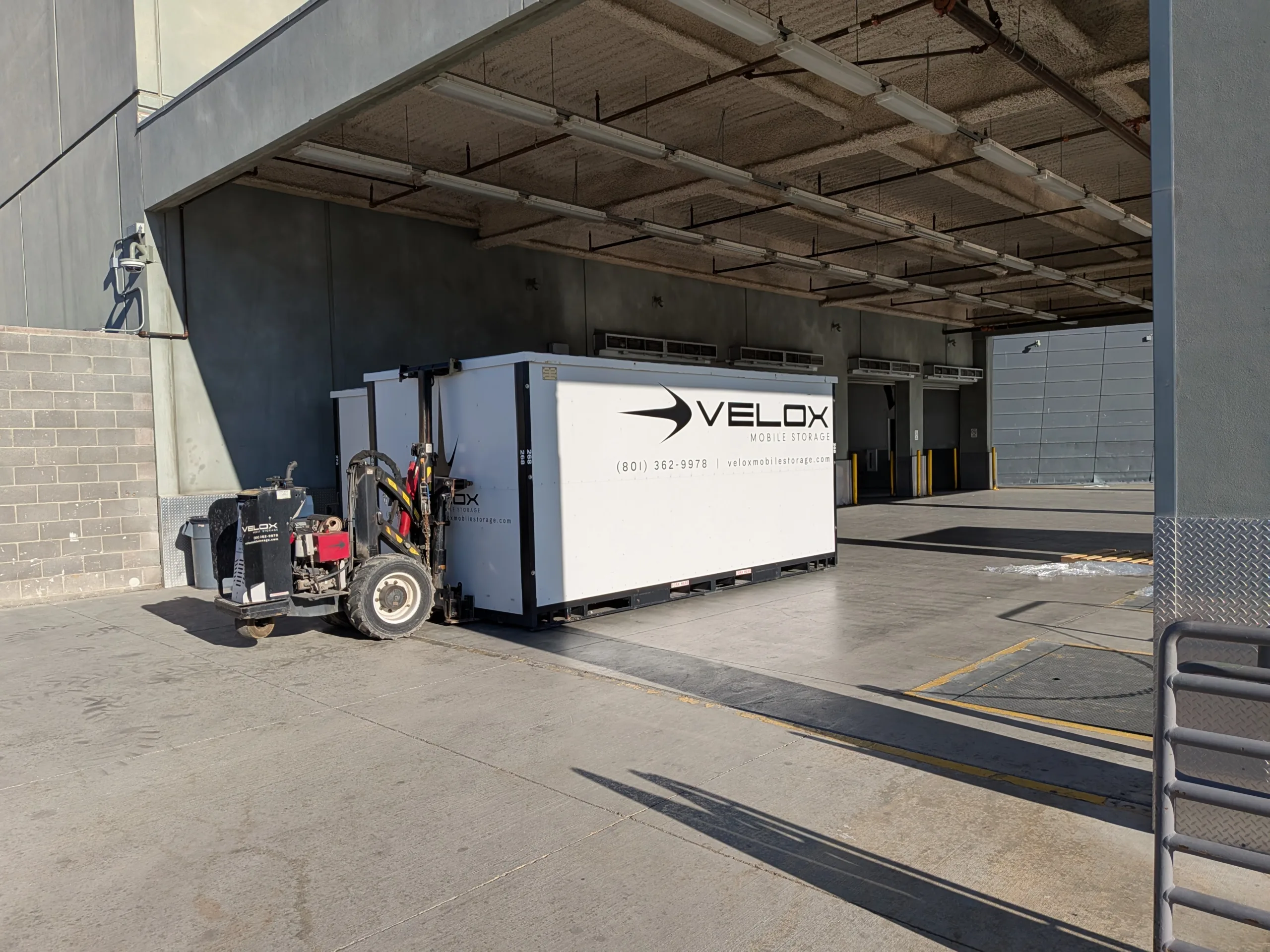
Every Velox container has one load limit, set by the lift equipment that moves it and by the truck’s legal payload — and a typical loaded unit weighs about 3,000–4,000 pounds, comfortably under it. For a normal household move in Utah or Colorado you will almost never touch the limit; it only matters when you load dense cargo such as food storage, tile, stone, safes, or machinery.
This guide explains why the limit exists, what fills an 8×16 container before it gets heavy, how to balance a load, and when to call or text the Velox team to confirm the current limit before you start loading.
Why Weight Limits Exist
1. Transportation Safety
Our trucks and lifting equipment are designed to handle a certain maximum weight. If a container is too heavy, it can be unsafe to load, move, or transport.
2. Protecting Your Belongings
Excessive weight can put stress on the container floor and structure, increasing the risk of damage to your items.
3. Following the Law
Commercial vehicles must comply with state and federal weight regulations. Overloaded containers can result in fines or transport delays.
Typical Weight Limits for 8×16 Containers
Velox uses one load limit for its 8×16 containers rather than an industry range, and it sits well above what a fully furnished home usually weighs — most loaded units come in around 3,000–4,000 pounds. Because the figure depends on the equipment moving your container, we confirm the current limit with you when you book.
Note: Planning to load food storage, tile, stone, a safe, or machinery? Call or text the Velox team before loading day — we will confirm the current limit and help you plan the load. A second container is often the easiest answer.
What a Full Load Looks Like
Here are some examples to help visualize:
-
Household Goods: A fully furnished 2–3 bedroom home, when loaded evenly, is typically under the limit.
-
Appliances: Standard kitchen and laundry appliances are fine — just avoid loading too many in one container.
-
Construction Materials: Lumber, tile, bricks, and stone are heavy. A few pallets of these can reach the limit quickly.
Tips for Staying Within the Weight Limit
1. Distribute Weight Evenly
Place heavier items on the bottom and toward the center of the container. Avoid putting all heavy items at one end, and balance side to side too — on one Boulder job a customer stacked every can of food storage along one wall and the unit leaned. Our container organizing guide shows a layout that keeps weight low and centered.
2. Mix Heavy and Light Items
Spread out dense items like books or weights with lighter belongings like linens or plastic bins.
3. Avoid Overpacking
It’s tempting to cram everything into one container, but sometimes using a second unit is safer (and cheaper) than overloading one. There is no deposit and the monthly rate never rises after the first month, so a short second unit is a small, predictable cost — see what affects your price.
4. Ask for Guidance
If you’re unsure about the combined weight of your items, our team can help you estimate — one local person answers calls and texts, not a call center. Draining water-storage barrels before a move and loading equipment with the fuel removed (fuel is not allowed in the container anyway — see what not to store) are the two easiest ways to shed hundreds of pounds.
Heavy Items That Require Extra Caution
-
Pianos
-
Large safes
-
Solid wood furniture
-
Home gym equipment
-
Construction debris or scrap metal
If you have multiple heavy items like these, we may recommend spreading them across containers or scheduling multiple moves. Tell us about pianos, large safes, and machinery before loading day so the driver knows what is inside.
What Happens if the Container Is Overweight?
If your container exceeds the safe weight range:
-
We may not be able to transport it until the load is reduced.
-
Additional labor or trips to redistribute the load may result in extra charges.
-
Transport could be delayed until it’s safe and legal to move.
Our goal is to prevent this by providing clear guidance before you start loading.
Why Velox’s Policy Works for You
-
Safety First — Protects you, our drivers, and your belongings.
-
No Guesswork — We’re upfront about the limit and how to stay under it.
-
Local Help — Our Utah and Colorado team can provide on-site advice if needed.
Load Smart, Move Smooth
A little planning goes a long way toward avoiding weight-related issues. By understanding and following the weight limit, you’ll have a smoother, faster, and safer moving or storage experience.
Contact Velox today to discuss your project and get personalized advice on loading your container.
Weight Limit FAQ
How much weight can a Velox container hold?
Enough for a fully furnished 2–3 bedroom home loaded evenly — most loaded units weigh about 3,000–4,000 pounds and the limit sits well above that. Ask the Velox team for the current figure when you book, especially if you are storing food storage, tile, stone, a safe, or machinery.
What is the heaviest thing people load?
Food storage. Cases of cans and buckets of grain add up faster than furniture does, so spread them across the floor and along both walls rather than stacking them at one end.
What happens if my container is overweight?
The driver may not be able to lift it safely or legally until some weight comes out, which can delay your move and add a trip. A quick call before loading day avoids this — we would rather bring a second container than leave a loaded one behind.
Does a heavier load cost more?
Not while it is within the limit. Your rate is based on the number of containers, rental length, number of moves, and distance — not on how much you put inside. Rates do not rise after the first month and there is no deposit; see our FAQ for the full terms.