
June 15, 2026
Updated by the Velox team
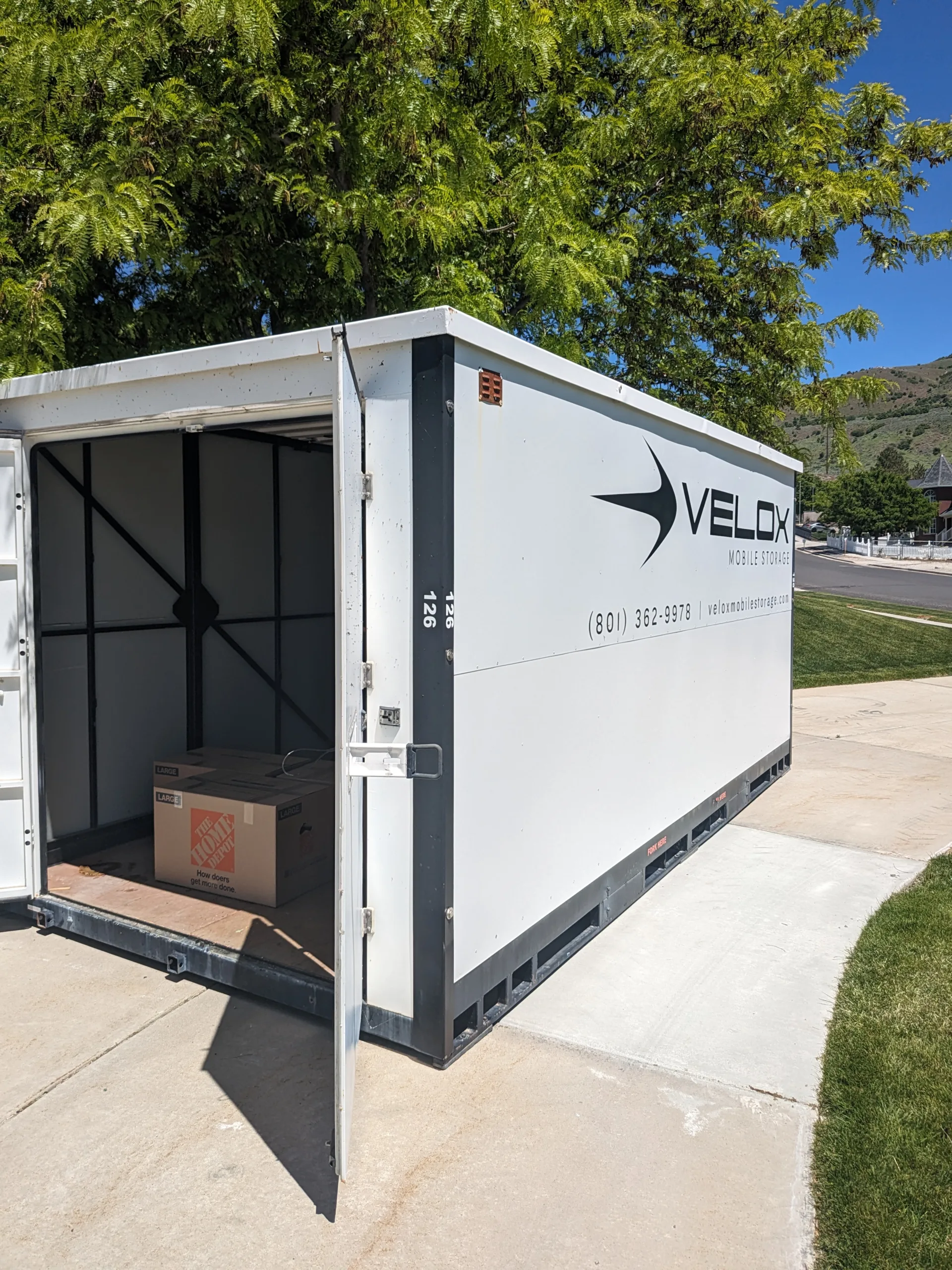
To organize a portable storage unit well, put heavy furniture and heavy boxes on the floor first and spread them across the whole container, stack uniform boxes in columns, keep anything you might need near the door, and strap tall stacks to the tie points so nothing shifts when the container is moved. The steps below walk through loading a Velox 8×16 container from planning to moving day, whether it sits in your Utah driveway or at our yard.
You’ve scheduled your portable storage unit delivery. The container is on its way, and now you’re staring at everything you need to pack, wondering where to even start. A pile of boxes here, furniture there, and a nagging feeling that if you don’t do this right, you’ll regret it later.
Organizing a storage container well makes all the difference. Pack it smart, and you’ll have easy access to what you need, maximize every inch of space, and keep your belongings protected. Pack it poorly, and you’ll be unpacking half the container just to find one box, risking damage to furniture and creating stress you don’t need.
The good news is that packing a portable storage unit doesn’t require professional skills or complicated systems. It just takes a little planning, some practical strategies, and knowing a few tricks that make the process smoother.
Here’s how to organize your storage unit so everything fits, stays safe, and is easy to access when you need it.
Start with a Plan Before You Start Packing
Walking up to an empty portable storage container without a plan is a recipe for chaos. You’ll pack haphazardly, realize you should have done things differently halfway through, and end up with wasted space and poor organization.
Take a few minutes before delivery day to think through what you’re storing. Make a list of everything going into the container. Group items by category: furniture, boxes, seasonal items, sports equipment, and anything fragile or valuable.
Think about timing too. Will you need access to certain items while the container is in storage? If so, those need to go near the door. Items you won’t touch until moving day can go toward the back.
Sketch a rough layout if it helps. You don’t need architectural drawings, just a general sense of where big items will go and how you’ll create pathways or access points if needed.
This planning phase takes maybe fifteen minutes, but it saves hours of frustration later.
Gather the Right Packing Supplies
You can’t organize a storage container properly without the right materials. Cheap or inadequate packing supplies lead to damaged belongings and wasted space.
Sturdy boxes in uniform sizes stack better and use space more efficiently than random mismatched boxes. Medium-sized boxes work best for most items. They’re large enough to hold a decent amount but not so big that they become too heavy to lift safely.
Packing tape, and plenty of it, keeps boxes sealed and secure. Don’t skimp here. Boxes that pop open mid-move create messes and potential damage.
Furniture blankets or moving pads protect larger items from scratches, dings, and rubbing against other belongings. Even if your furniture isn’t expensive, protecting it makes sense.
Plastic wrap works wonders for keeping drawers closed, protecting upholstered furniture, and bundling awkward items together.
Labels and markers are non-negotiable. You’ll think you’ll remember what’s in each box. You won’t. Label everything clearly on multiple sides so you can identify contents no matter how boxes end up stacked.
One more thing to sort out before the boxes come out: a few items can never go in the container. Gasoline, propane, fireworks, ammunition, chemicals and anything with fuel in it stay out, and food, documents, cash, jewelry and medications should travel with you. Our guide to what can and cannot go in a portable storage unit has the full list.
Pack Heavy Items First and on the Bottom
Basic physics applies to packing a storage unit. Heavy items go on the bottom. Light items go on top. Ignore this rule and you’ll end up with crushed boxes and broken belongings.
Start with your heaviest furniture. Dressers, bookshelves, filing cabinets, and appliances form a stable base layer. Position these items along the walls and back of the container first.
Appliances should be clean and dry before packing. Moisture trapped in refrigerators or washing machines can cause mildew and odors. Leave appliance doors slightly open if possible, or pack them with ventilation in mind.
Heavy boxes filled with books, tools, or kitchenware also belong on the bottom layer. Stack them tightly together to prevent shifting during transport.
Once you’ve established this heavy base layer, you can build upward with lighter items without worrying about weight distribution causing problems.
Spread that heavy layer across the whole floor rather than piling it at one end. A Velox container is lifted and set by a machine, not tipped or dragged like a dumpster, and an evenly loaded unit travels better. If you are storing something unusually heavy, such as a safe, a year of food storage, tile or machinery, read up on the weight limit for a loaded container and mention it when you book so we can plan the pickup.
Use Furniture as Additional Storage Space
One of the best ways to maximize space in a portable storage container is to use furniture itself as storage. Hollow items like dressers, filing cabinets, and wardrobes can hold other belongings.
Dresser drawers can stay full of clothing, linens, or soft items. Just secure the drawers with plastic wrap or tape so they don’t slide open during transport. This saves significant box space and keeps clothing organized.
Filing cabinets work the same way. Leave paperwork or small items inside as long as the weight stays manageable. Secure the drawers and you’ve turned the cabinet into its own contained storage unit.
Wardrobe boxes or tall cabinets can hold hanging clothes, keeping them wrinkle-free and ready to unpack quickly later.
Even the inside of appliances can be used for lightweight, soft items like towels or pillows, as long as you’re careful not to add too much weight or anything that could cause damage.
Create Vertical Space and Stack Strategically
A storage container has limited floor space, which means you need to think vertically. Stacking efficiently uses the full height of the container and maximizes capacity.
Stack boxes in columns rather than random piles. Uniform boxes of similar sizes stack cleanly and create stable towers that won’t topple.
Place the heaviest, sturdiest boxes on the bottom of each stack. Work your way up to lighter boxes as you go higher. This prevents crushing and keeps everything secure.
Leave a small gap between stacks if possible. Even an inch or two of space helps with airflow and gives you flexibility if you need to shift things around later.
Resist the urge to stack too high near the door. You want to be able to access the container without everything tumbling out when you open it.
Disassemble Furniture When Practical
Large furniture takes up a lot of space in a portable storage unit. Disassembling what you can dramatically increases how much you can fit.
Bed frames, tables, and shelving units often break down into manageable pieces. Remove legs from tables and sofas. Take apart bed frames and stack the pieces flat against the wall.
Keep all hardware together. Use small bags or containers labeled clearly with which furniture piece they belong to. Tape these directly to the furniture if possible so nothing gets lost.
Mattresses and box springs can stand upright along the walls, creating more usable floor space. Just make sure they’re wrapped in mattress bags or plastic to keep them clean.
Even partially disassembling furniture helps. Removing cushions from sofas, taking shelves out of bookcases, and detaching table leaves all create extra space and make furniture easier to pack around.
Protect Fragile Items with Extra Care
Fragile belongings need special attention when organizing a storage container. Broken dishes, shattered glass, or damaged electronics aren’t worth the hassle of poor packing.
Wrap fragile items individually. Use bubble wrap, packing paper, or even towels and linens to cushion breakables. Pack them in sturdy boxes with extra padding on all sides.
Label fragile boxes clearly on multiple sides. Use words like “Fragile” or “Handle with Care” and mark which side should face up.
Place fragile boxes on top of heavier, stable items. Never put them on the floor where they can be crushed or near areas where shifting might cause impacts.
Electronics should be packed in their original boxes if you still have them. If not, wrap them carefully and pack them in boxes with plenty of cushioning. Remove batteries from electronics to prevent corrosion during storage.
Mirrors, artwork, and glass items should be wrapped and positioned upright between larger furniture pieces or mattresses where they won’t shift or fall.
Leave Pathways for Access if Needed
If you’ll need to access your storage unit while it’s in storage, organization becomes even more important. You don’t want to unpack the entire container just to reach one box.
Create a center aisle or pathway leading from the door into the container. This takes up some space but pays off massively in convenience.
Place frequently accessed items near the door or along the pathway. Things you won’t need until moving day can go deeper into the container or higher up in stacks.
Keep an inventory list near the entrance or taped inside the door. A simple written record of what’s in the container and roughly where helps you locate items without unpacking everything.
If you’re storing long-term, consider organizing by room or category. Keep kitchen items together, bedroom items together, and so on. This makes retrieving specific things much easier.
Fill Empty Spaces and Gaps
Wasted space in a portable storage container means you’re not getting full value. Once your major items are loaded, look for gaps and empty spaces you can fill.
Soft items like pillows, blankets, and clothing can fill odd-shaped spaces between furniture. They also provide extra cushioning and protection for nearby items.
Small boxes or bags can tuck into corners, under tables, or in gaps between larger boxes.
Use the vertical space above furniture. If there’s room above a dresser or table, stack lightweight boxes there to maximize capacity.
Just be careful not to over-pack to the point where items are crammed in so tightly that you can’t access anything or risk damaging belongings.
Secure Everything to Prevent Shifting
Even in a portable storage unit that’s staying stationary, items can shift over time. If your container is being transported, securing everything becomes even more critical.
Use straps or rope to secure tall stacks of boxes or furniture that might tip. Tie items to anchor points inside the container if available.
Place heavier items against the walls to create natural barriers that hold lighter items in place.
Fill gaps between items to prevent sliding. Blankets, towels, or even extra boxes work well as space fillers that keep everything snug.
The goal is to pack tightly enough that nothing moves, but not so tight that you crush or damage belongings.
Label Everything Clearly and Keep an Inventory
You’ll thank yourself later for taking time to label properly. When you’re unpacking or searching for something specific, good labeling saves enormous amounts of time and frustration.
Label boxes on multiple sides, not just the top. When boxes are stacked, you need to see labels from the front or side.
Be specific with labels. “Kitchen” is okay, but “Kitchen: Pots and Pans” is much better. “Bedroom: Winter Clothes” beats “Clothes” every time.
Consider color-coding by room. Use different colored markers or stickers for each room in your home. This makes sorting at your new place much faster.
Keep a master inventory list. Write down or type up everything going into the storage container with box numbers or descriptions. Keep a copy with you and maybe tape one inside the container door.
Make Moving Day Easier with Smart Organization
The way you organize your portable storage container directly impacts how smoothly moving day goes. A well-organized container means faster, easier unpacking.
Pack items you’ll need first near the door. Essentials like toiletries, basic kitchen items, and immediate-use belongings should be the last things loaded and first things unloaded.
Keep similar items together. All kitchen boxes in one area, all bedroom items in another. This lets you unpack room by room instead of scattering belongings across your new home.
If you’re coordinating with movers or helpers, clear organization makes their job easier and faster. They can grab what they need without asking constant questions or wasting time searching.
Rental Guide: Everything Utah Residents Need to Know
Learn from Experience and Adjust
If this is your first time packing a storage unit, you’ll learn as you go. That’s normal. What matters is being flexible and adjusting your approach as you see what works and what doesn’t.
If something isn’t fitting right, don’t force it. Take a step back, rethink the layout, and try a different approach.
If you realize halfway through that you should have done something differently, it’s often worth taking the time to repack rather than living with poor organization.
And remember that Velox is here to help. If you have questions about packing, container size, or how to handle specific items, give us a call. We’ve helped countless Utah families pack portable storage containers and we’re happy to share what works.
Ready to Pack Smarter?
Organizing a portable storage unit doesn’t have to be overwhelming. With a little planning, the right supplies, and these practical strategies, you can pack efficiently and protect your belongings.
At Velox, we deliver storage containers that give you the space and time to pack at your own pace. No rushing, no stress, just a straightforward way to store and move your belongings.
Delivery is simple: the truck stays on the street, a lift machine sets the container in a single parking stall of your driveway, and you load at your own pace. See how delivery and pickup work, or check our flat monthly rate: one-month minimum, no deposit, and the price does not go up after the first month.
Click here for a free, no-obligation quote, or call us at (801)362-9978 to talk about your portable storage needs. We’ll help you figure out the right container size and answer any questions about packing and organizing.
Because when you pack it right, everything else gets easier.
Quick Reference: Loading Order
- Heavy furniture and appliances go in first, on the floor against the back wall.
- Spread weight evenly side to side. Do not stack all the canned goods or books along one wall.
- Boxes next, heaviest on the bottom, stacked in tiers.
- Fill gaps with soft items so nothing can shift when the container is moved.
- Mattresses, grills, bikes and patio furniture usually go in last.
- Put anything you might need before move-in right by the doors.
- Check for pets before you lock up.
Portable storage packing FAQ
Should heavy boxes go in first?
Yes. Heavy furniture and heavy boxes go on the floor first, spread evenly across the container rather than piled at one end, with lighter boxes stacked on top. Because a Velox container is set on the ground and lifted by a machine, there is no front or back to favor; even weight across the floor is what matters.
Do I need to leave a walkway?
Only if you expect to need things while the container is in storage. If it stays in your driveway you can open it any time. If we store it at our yard, access is by appointment: call or text ahead, and a team member meets you at the gate, unlocks, and locks up when you leave. Storing at the yard adds nothing to the monthly rate.
How do I keep things from shifting when the container is moved?
Strap or rope tall stacks to the interior tie points, put heavy items against the walls, and fill every gap with soft items such as blankets, pillows and bagged clothing. A loaded container is lifted onto the truck and set down again, never tipped or dragged, but it still rides on the road, so pack tightly enough that nothing can slide.
Is the container climate controlled?
No. A Velox container keeps out normal rain and snow, but it is not climate controlled. Load everything dry, use sealed totes for anything sensitive, add moisture absorbers for long storage, and keep documents, electronics, art and antiques somewhere else. Our guide to preventing mold and moisture in portable storage covers the details.