
August 15, 2026
Updated by the Velox team
Most households load a Velox portable storage container in a single weekend: a studio takes about three to five hours, a two- or three-bedroom home eight to twelve, and a four-bedroom home twelve to twenty. Pre-packing and two or three helpers can cut those numbers roughly in half, while loading solo about doubles them. And because the container sits in your driveway for as long as you need it, with no price jump after the first month, you can spread the work over a week if that is easier than one long day.
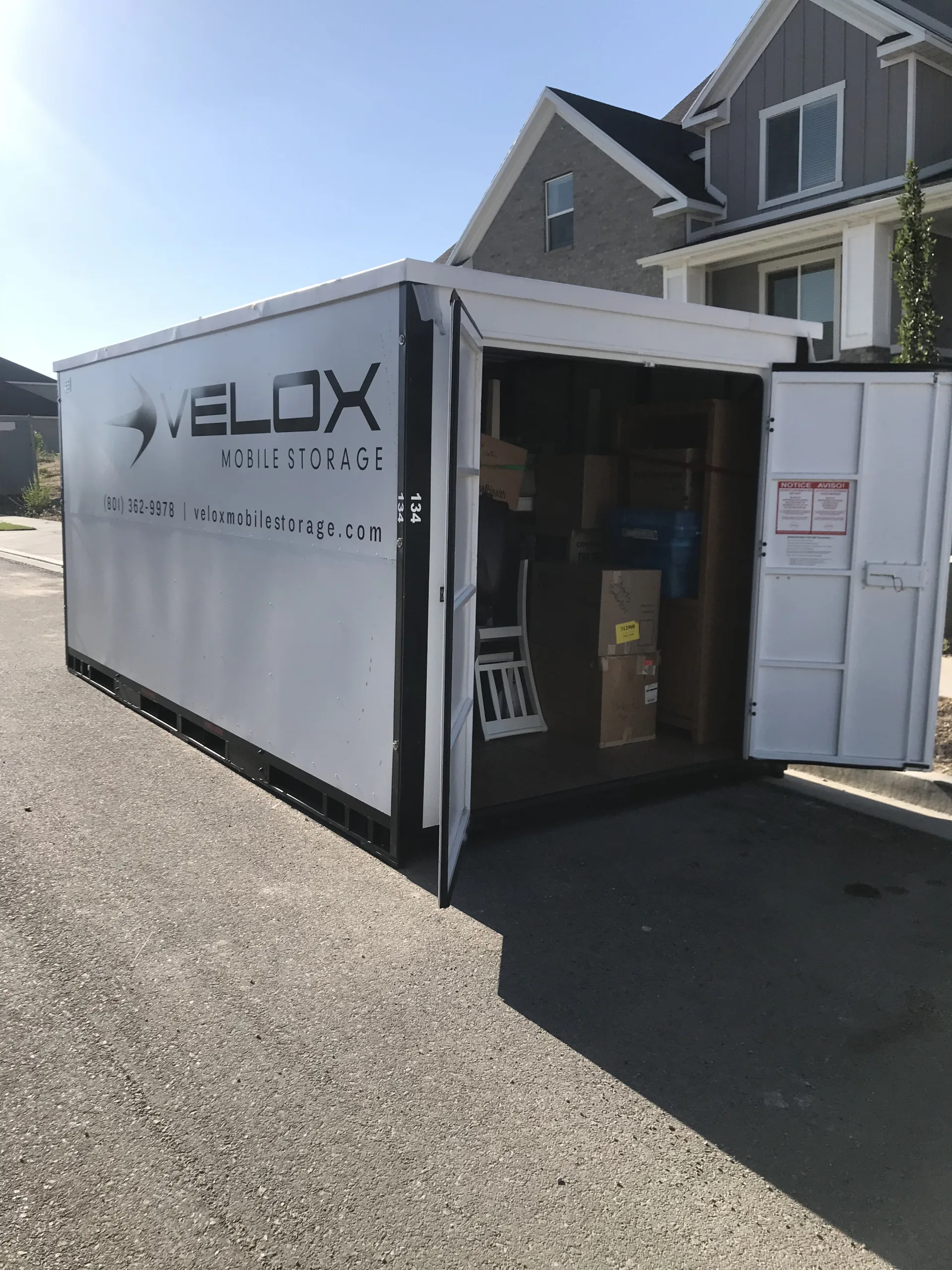
You’ve scheduled your portable storage container delivery. It’s sitting in your driveway, doors open, ready to be filled. Now you’re wondering: how long is this actually going to take? Should you block off a whole weekend? Can you knock it out in an afternoon? Do you need to take time off work?
It’s a fair question, and one that doesn’t have a single answer. Loading time varies dramatically based on how much you’re storing, how organized you are, how much help you have, and whether you’re packing carefully or just trying to get everything in as fast as possible.
But understanding the factors that affect moving container timing and having realistic expectations helps you plan appropriately. Nothing’s worse than thinking you’ll finish in a few hours only to realize at dinnertime that you’re maybe halfway done and exhausted.
Here’s what actually determines how long it takes to load a storage container, with realistic time estimates for different situations.
You can also check whether a container fits your driveway with our 3D tool. Pick a spot like yours and move the container around.
The Factors That Affect Loading Time
Several variables combine to determine how long your specific loading situation will take. Understanding these helps you estimate timing more accurately than generic advice ever could.
Volume of belongings matters most obviously. Loading a studio apartment’s worth of stuff takes much less time than loading an entire four-bedroom house. More items mean more time, simple as that.
Organization level before you start makes an enormous difference. If everything’s already boxed, labeled, and staged near your door, loading goes exponentially faster than if you’re still sorting, packing, and making decisions about what to keep while you’re trying to load.
Number of helpers changes everything. Loading solo is slow. Two people work much faster. Three or four people can load efficiently if they coordinate well. More than four can actually slow things down unless there’s space for everyone to work without getting in each other’s way.
Physical fitness and capability matter. Young, healthy people move faster than those with physical limitations. Families with small children load slower because kids need supervision and can’t help much with heavy lifting.
Distance from your home to the storage container affects efficiency. If the container’s right outside your door, trips are quick. If it’s at the end of a long driveway or around a corner, each trip takes longer and adds up over hundreds of trips.
Furniture disassembly needs factor in if large items require taking apart to fit through doors or pack efficiently. Every piece that needs disassembly adds significant time to the process.
Weather conditions during loading can speed things up or slow them down. Pleasant weather makes outdoor work easy. Extreme heat, cold, rain, or snow slow everyone down and require more breaks.
Time Estimates by Home Size
These estimates assume average organization, two to three helpers, and typical packing scenarios. One 8×16 Velox container (about 800 cubic feet inside) usually holds a two- to three-bedroom home; see how much fits in one container if you are unsure whether you need a second unit. Adjust up or down based on your specific situation.
Studio or small one-bedroom apartment: Three to five hours for most people. This covers boxing up remaining items, carrying everything to the container, and basic organizing inside. Someone very organized with minimal belongings might finish in two hours. Someone packing as they go could take all day.
Larger one-bedroom or small two-bedroom apartment: Five to eight hours typically. More belongings mean more trips, more packing time, and more decisions about how to arrange items inside the container. Count on most of a day if you’re working steadily.
Two to three-bedroom home: Eight to twelve hours for an average household. This usually becomes a full weekend project. One day for heavy packing and major furniture, second day for finishing smaller items and final organizing. Trying to do it in one marathon day is possible but exhausting.
Four-bedroom or larger home: Twelve to twenty hours or more depending on how much you’ve accumulated. Very few people complete this in a single day. More realistic is dedicating a long weekend or spreading loading across multiple days, packing rooms in stages as you have time.
These are just guidelines. Your actual time depends heavily on the other factors discussed throughout this blog.
Organized Pre-Packing vs Loading While Packing
The single biggest variable in loading time is whether you pre-pack or pack as you go. This can easily double or triple the total time required.
Pre-packed scenarios where everything’s already in labeled boxes, furniture’s disassembled, and items are staged for loading work dramatically faster. You’re essentially just carrying boxes and furniture from inside to the container and stacking them efficiently. Most of your time goes to the physical loading, not decision-making or packing.
Loading while packing means you’re still sorting through closets, wrapping dishes, taking apart furniture, making decisions about what to keep, and packing boxes as you go. Between every few trips to the storage container, you’re stopping to pack more items. This constant context-switching between packing and loading slows everything down significantly.
If time is your primary concern, pre-pack as much as possible over days or weeks before the container arrives. Loading day becomes just loading, not the entire packing process compressed into exhausting marathon sessions.
If flexibility matters more and you want time to make thoughtful decisions, loading while packing works fine. Just recognize it takes much longer and plan accordingly.
Solo Loading vs Team Loading
Working alone changes timing dramatically compared to having help. Not only does work go slower, but certain tasks become much harder or impossible without assistance.
Solo loading typically takes at least twice as long as two-person loading for the same amount of stuff. You’re making every trip by yourself, maneuvering every piece of furniture alone, and doing all the organizing inside the container without help.
Heavy or bulky items become serious challenges when working solo. Mattresses, couches, dressers, and appliances are difficult or unsafe to move without help. Attempting solo loading of a full household often means you’re limited to boxes and smaller items, with large furniture requiring help later.
Two people work far more efficiently than the sum of two solo efforts. One person can pack and stage items while the other loads. Heavy items become manageable. You can pass items up into the container rather than climbing in and out constantly. Coordination makes the whole process flow smoothly.
Three or four people work even faster if tasks are divided well. One person packing, two carrying and loading, one organizing inside the container. Just make sure there’s enough space for everyone to work without crowding.
Beyond four people, returns diminish unless you have a very large loading project. Too many people get in each other’s way, especially in tight spaces like apartment hallways or standard driveways.
If you’re planning solo loading, double the time estimates mentioned earlier and be realistic about whether you can safely handle furniture without help.
Loading Strategy and Efficiency
How you approach loading affects time significantly. Random loading where you just carry items out and toss them into the container works fastest initially but creates problems that slow you down later.
Strategic loading where you organize as you go takes a bit more time upfront but makes everything else easier. You’re placing items thoughtfully, stacking efficiently, and creating pathways if you’ll need access later. This approach is faster overall when you consider the complete process.
Some people load heavy items and furniture first, creating a base layer, then fill in with boxes. Whichever order you choose, keep the heaviest boxes low and spread the weight evenly from side to side: the container is moved loaded, and a balanced load travels better (see our weight limit guide). Others prefer loading room by room, keeping items organized by where they came from. Either approach works as long as you’re being intentional.
Taking time to wrap and protect furniture properly during loading prevents damage but adds minutes per piece. Deciding whether protection or speed matters more affects overall timing.
Creating an assembly line where items are staged near the container and multiple people work together loading steadily is the fastest approach for large jobs. But it requires coordination and enough helpers to make it work.
Breaks and Pacing
Few people load containers in one continuous sprint. Taking breaks for water, food, and rest is necessary for safety and to maintain energy through long loading sessions.
Plan for at least short breaks every hour or two. Longer breaks for meals if you’re working through lunch or dinner. These breaks add up, so factor them into your overall timeline.
Physical exhaustion slows loading significantly as the day progresses. The first hour you’re moving fast. By hour four or five, everyone’s dragging. What took five minutes early in the day takes ten minutes when you’re tired.
Heat, cold, or difficult weather requires more frequent breaks. Loading in Utah summer heat means stopping for water regularly. Winter cold means warming up periodically. Rain or snow slows everything and requires breaks to dry off and rest.
Working across multiple days often makes more sense than pushing through exhaustion in a single marathon session. Taking your time reduces injury risk and produces better results.
Kids, Pets, and Other Logistics
Family situations affect loading time in ways people don’t always anticipate. Young children need supervision and can’t help much with actual loading. Pets get underfoot or need attention. These realities add time.
Having someone dedicated to managing kids while others load works better than trying to do both simultaneously. If that’s not possible, loading naturally takes longer as adults balance parenting and packing.
Pets ideally get secured somewhere safe during heavy loading activity. Curious dogs or cats in the loading zone slow things down and create safety concerns. Securing them adds a bit of time upfront but speeds overall loading.
Coordinating with other household members’ schedules affects available loading windows. If only certain people can help and they’re only available specific times, loading might need to happen in shorter sessions rather than one continuous push.
These logistical realities are normal and expected. Just build them into planning rather than assuming loading happens in ideal, distraction-free conditions.
Professional Help and Movers
Hiring professional packers or movers changes timing completely. Professionals work much faster than typical homeowners because they do this constantly and have efficient systems.
Professional loading crews can typically load a two-bedroom apartment in two to three hours. A full three-bedroom house might take four to six hours with a three-person professional crew. They’re fast, efficient, and experienced.
The cost of professional help needs weighing against the value of your time and the physical demands of loading. If you’re busy, physically unable to do heavy lifting, or simply want to avoid the exhaustion of loading yourself, paying professionals might make sense.
Some families hire professionals just for heavy lifting and furniture while handling boxes themselves. This hybrid approach saves money while eliminating the hardest physical work.
If you’re considering professional help, get quotes and book early, especially during busy moving seasons. Good crews fill up quickly and last-minute booking often means higher prices or no availability.
Realistic Scenario Examples
Putting it all together, here’s what loading actually looks like for typical situations.
Organized college student, studio apartment, two helpers: Everything’s already packed in boxes and bags. Two friends help on move-out day. Total loading time: three hours including taking apart the bed frame and organizing inside the container. Finished by noon with pizza break included.
Young couple, two-bedroom apartment, minimal furniture, packing while loading: Work together over a weekend. Saturday: six hours packing and loading most items. Sunday: four more hours finishing up and loading remaining boxes. Total: ten hours spread across two days. Exhausting but manageable.
Family of four, three-bedroom house, moderately organized, three adults loading: Start Saturday morning. Work until lunch, break, back at it afternoon until dinner. Sunday morning for final loads and cleanup. Total: fourteen hours of actual loading across two days. Kids mostly entertained by grandma while parents and uncle handle heavy lifting.
Single person, four-bedroom house, solo loading, very organized: Pre-packed everything over two weeks. Friends help Saturday with furniture in exchange for pizza. Solo all day Sunday loading boxes. Returns Monday evening to finish final items. Total: sixteen hours of personal time plus four friend-hours for furniture help. Spread across three days made it survivable.
These real scenarios illustrate how varied timing can be based on circumstances. Your situation will have its own unique combination of factors.
Planning Your Loading Timeline
Based on understanding these factors, you can estimate your own loading timeline more accurately.
Start by honestly assessing how much you’re storing and how organized you currently are. Don’t wish-cast about how quickly you think you should be able to work. Be realistic.
Consider who’ll be helping and their physical capability. Account for breaks, meals, and realistic working hours rather than theoretical maximum productivity.
Add buffer time. Things always take longer than expected. Items don’t fit as anticipated. You discover packing supplies running low. Weather changes. People show up late or leave early. Buffer time turns stressful rushes into manageable projects.
If you’re scheduling container pickup, give yourself extra time rather than cutting it close. Having the container an extra day or two costs much less than the stress of racing against pickup time.
Take the Time You Need
One of the biggest advantages of portable storage containers is that they come to you and stay as long as you need them. There’s no pressure to finish loading in some arbitrary timeframe.
Traditional moving trucks need returning by specific times. Storage facility hours dictate when you can load. Portable storage eliminates these constraints. Load at your pace, take breaks when you need them, and finish when you’re ready.
This flexibility means you can be realistic about timing instead of pushing yourself into exhaustion or injury trying to meet artificial deadlines.
Whether it takes you four hours or four days, what matters is finishing safely and getting everything packed properly, not achieving some imaginary speed record.
Moving at Your Pace
At Velox, we know loading a storage container is hard work that takes real time and effort. We design our service to give you the flexibility to work at whatever pace makes sense for your situation.
Keep the container as long as you need to load it properly. No rush, no pressure, no surprise fees for taking an extra day: billing is a simple one-month minimum, there is no deposit, and your monthly rate never rises after the first month. If plans change mid-load, just call or text the Velox team to reschedule.
Get a free, no-obligation quote, or call us at 801-362-9978 to discuss your timeline and get help estimating how long your specific loading situation might take. We’ve helped thousands of people load containers and can offer realistic guidance based on your circumstances.
Because loading shouldn’t be a race. It should be done right, at a pace that works for you.
Loading Time FAQ
How long can I keep the container while I load it?
As long as you need. Velox bills a simple one-month minimum with no deposit, and your monthly rate does not go up after the first month, so taking a week to load costs the same as taking a weekend. Pickup is any time after that first month; call or text the team when you are ready.
Do I need to be home when the container is delivered?
Not if your placement instructions are clear. The driver contacts you before arrival, and texting a photo of the spot is the easiest way to show us where it should go. Clear the driveway of cars, low branches and wires first, and plan to be there if the spot is tight or unusual.
Is there a weight limit I should keep in mind while loading?
Yes. Velox containers are moved loaded, so there is a load limit, but a typical fully loaded household unit comes in well under it. The heaviest thing most people load is food storage. If you are storing a safe, tile, concrete or machinery, mention it when you book, and keep heavy items low with the weight spread from side to side.
What if I fall behind and need delivery or pickup quickly?
Book as early as you can. Next-day delivery is often possible and same-day occasionally, though Friday afternoons, the end of the month and holiday weeks fill up fast. Loaded-unit moves get priority over empty deliveries, so a pickup for a loaded container is usually easy to schedule.