

June 1, 2026
Updated by the Velox team
To get ready for a portable storage delivery, clear about one parking stall of firm, level ground, move the cars, check for low branches and wires, and text us a photo of the spot. You don’t have to be home if your instructions are clear. Our truck stays on the street, and a small machine carries the container to your spot and sets it down. It’s never tipped off the back or dragged. Most drop-offs take 15 to 20 minutes.
How delivery actually works
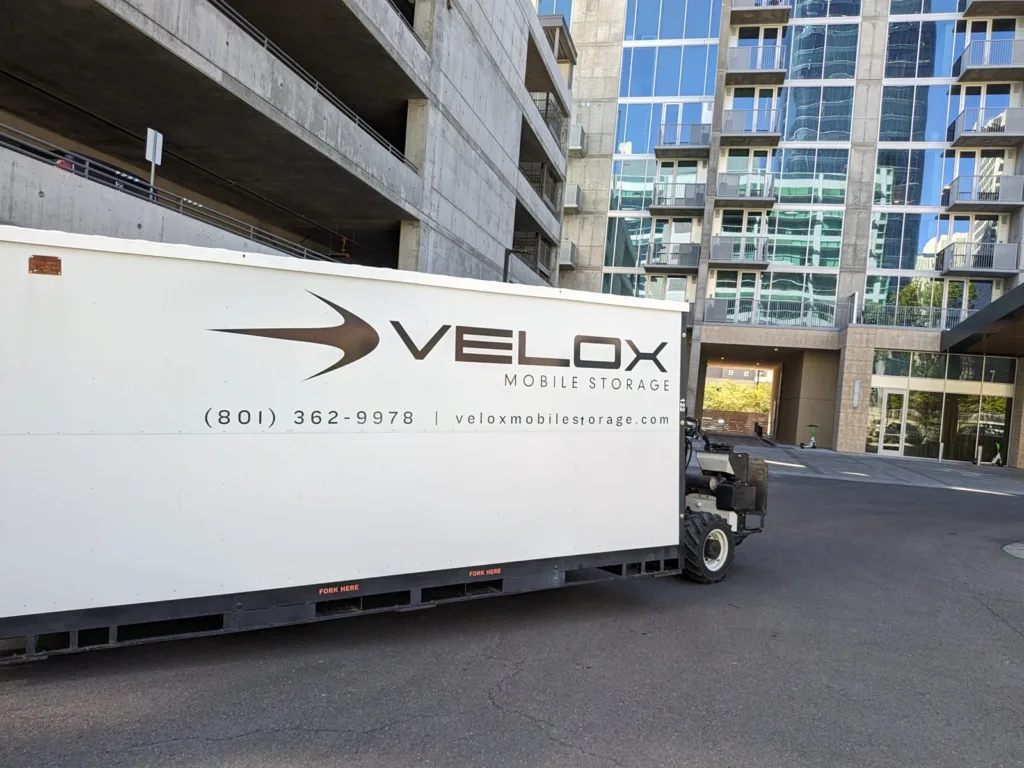
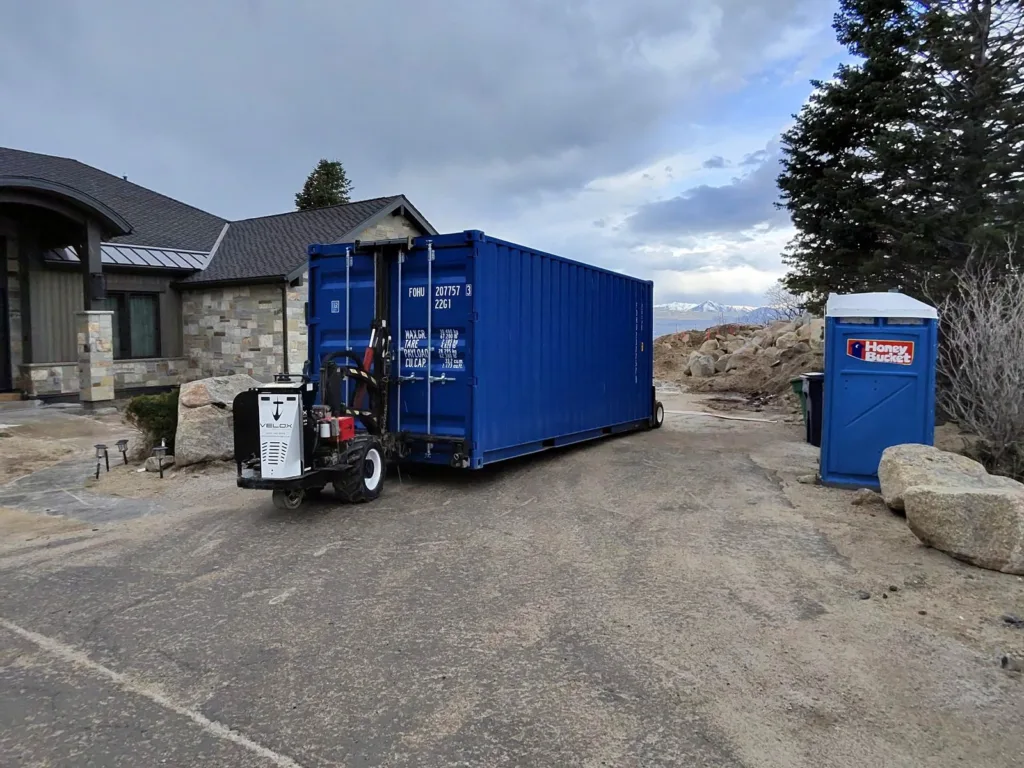
Most people picture a truck backing up the driveway and tilting the container off the back like a dumpster. That’s not how we do it. Our truck parks on the street. The container comes off the truck onto the road, and then the Velox Mule takes over. The Mule is a small, remote-controlled machine that carries the container up your driveway, onto an RV pad, under a tree or into a parking spot, and sets it down level.
Because the truck never drives onto your property, we can reach spots a tilt-bed truck can’t. A typical drop-off takes 15 to 20 minutes. Our fastest has been about 7.
Your delivery checklist
- 1Pick the spot. Anywhere a pickup truck could drive to. The container takes about one parking stall.
- 2Text us a photo. It’s the fastest way to settle placement, especially for slopes or tight corners.
- 3Check your HOA and city rules. Some limit how long a container can stay out.
- 4Look up. Low branches and wires along the path are the most common thing in the way.
- 5Tell us what’s underground. Mark any septic tank, drain field or sprinkler lines near the spot.
- 6On delivery day, move the cars and anything else in the path: trash cans, bikes, basketball hoops.
Not sure your driveway works? Try our 3D Will It Fit tool and move the container around a driveway, RV pad or street spot like yours.
How much space you need
We have one container size: 8 feet wide by 16 feet long, about one parking stall. Leave a few feet open in front of the doors so you can swing them open and walk boxes in. The door opening itself is 68 inches wide and 75 inches tall.
Think about what you still need to get to. If the container goes in front of the garage, will you need the car out during the move? If it goes on the street, check whether your city allows it. Our placement guide covers driveways, side yards, streets and more.
The ground: what works
Ideal
Concrete or asphalt driveways and pads
Usually fine
Compacted gravel, crushed rock, dirt or grass, as long as it’s firm, level and dry. Pavers are possible with care.
Avoid
Soft or freshly watered lawns, and anything over a septic tank or drain field
Will it damage my driveway? We’ve never damaged one. Each container sits on six rubber pads, and any marks they leave brush off. On uneven or brand-new concrete we use wood blocks. The Mule can leave tire marks, which is one more reason to pick the easiest spot. A slight slope down toward the back of the container is actually a plus, because it makes loading easier.
Tell us about anything underground. One customer told us the spot was a cement pad. Our machine sank two feet into an unmarked, home-dug septic area underneath it. If there’s a septic tank, drain field, cistern or anything hollow under the spot, let us know before we roll up. We look at sloped driveways case by case, so send a photo instead of guessing.
Weather and delivery
- Rain: fine on pavement. If the spot is grass or dirt and it’s soaked, we may suggest a firmer spot or a different day.
- Snow: shovel the spot and the path from the street. Once snow flies, some cities don’t want anything parked in the road, so plan on the driveway.
- Need to change the day? Call or text. Rescheduling is fine unless the truck is already on its way.
Do you need to be home?
No, as long as your placement instructions are clear. Tell us where you want the container and which way the doors should face. The driver will contact you before arriving and set it while you’re at work. If the spot is tight or unusual, it’s worth being there for a few minutes to point.
Fees are charged the day before delivery, so there’s nothing to pay the driver. You’ll get your pricing by email before delivery day.
After the container is set
- Open and close the doors once to make sure they latch.
- Put your own padlock on it. A lock isn’t included, but any padlock works, and we sell one at hardware-store price.
- Send proof of your contents coverage within 5 business days, or you’ll be enrolled in our contents protection plan.
- Start loading. Heavy furniture goes against the walls first. Here are our loading tips.
Questions people ask
How long does container delivery take?
Usually 15 to 20 minutes once the truck arrives. The Mule carries the container from the street to your spot and sets it down.
Does the truck drive on my driveway?
No. The truck stays on the street. A small remote-controlled machine carries the container onto your property. It’s never tipped or dragged.
Do I have to be home for delivery?
No, if your placement instructions are clear. The driver contacts you before arriving. Be there if the spot is tight or unusual.
How much room does the container need?
About one parking stall (8 by 16 feet), plus a few feet in front of the doors so you can load.
Will the container damage my driveway?
We’ve never damaged one. Containers sit on rubber pads, and we use wood blocks on uneven or new concrete. Tell us about pavers or anything underground.
Not sure about your spot?
Text us a photo and we’ll tell you yes, no, or “move the trailer and it’s fine” before you book.
Text Utah: (801) 362-9978 Text Colorado: (720) 674-8777 Get a free quote