
October 27, 2026
Updated by the Velox team
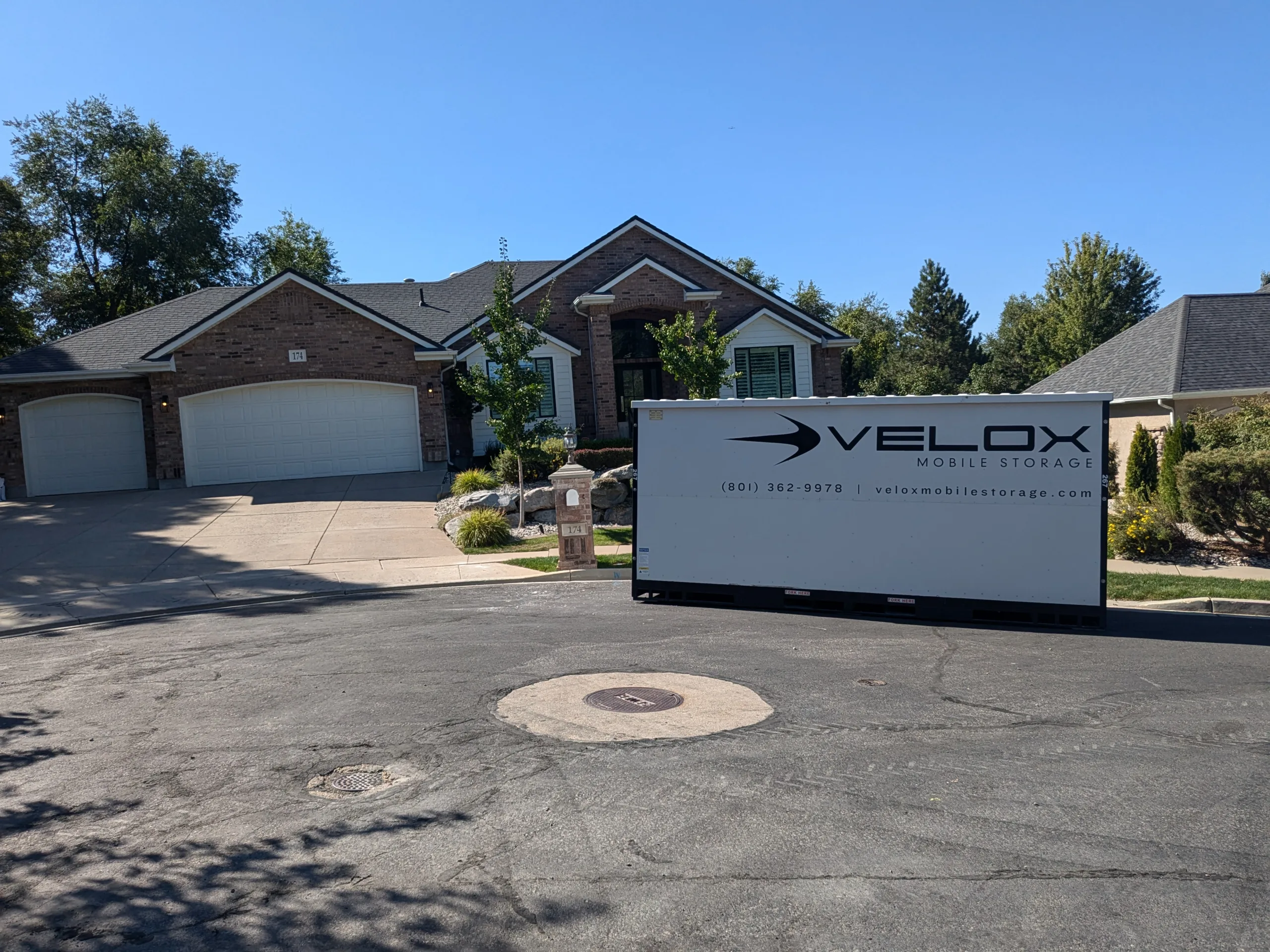
A contents pack-out is when a restoration company packs up the belongings in a water- or fire-damaged home and moves them out so cleanup and repairs can start. Damaged items go to the restoration company to be cleaned or written off. Clean, undamaged things often go into a portable storage container in your driveway, where they stay dry and locked until the house is ready. On most of the water and fire jobs we work, the restoration company rents the container and bills it to the insurance claim, so you usually don’t pay us directly.
What a pack-out actually is
When a pipe bursts, a water heater fails or a fire fills the house with smoke, the house can’t be repaired with everything still in it. Drying equipment needs open floors, wet drywall has to come out, and soot keeps settling on whatever is left behind. A pack-out clears the rooms so the crews can work.
Most restoration companies follow the same basic steps. They look at each item and decide whether it can be saved. They photograph and list everything, and that list becomes part of your insurance claim. Then they pack it, move it out and clean what can be cleaned. When the house is fixed, everything comes back. The industry calls that last step the pack-back.
Why the first two days matter
The EPA’s guidance is to dry water-damaged materials within 24 to 48 hours to help prevent mold. A basement full of furniture and boxes slows that drying down. That’s why restoration crews want contents out fast, and why we treat their calls as a priority.
Next-day delivery is often possible, and same-day happens when the schedule allows. Our fastest delivery ever was in Sandy, for a restoration company working a job about five minutes from where the truck already was. We see the same need along the Front Range, where a surprising share of our Denver work is restoration.
Who does what during a pack-out
| Who | What they do |
|---|---|
| Restoration company | Inspects, photographs and packs your belongings, cleans what can be saved, and usually orders the container |
| Insurance adjuster | Decides what your claim covers, including pack-out, cleaning and storage |
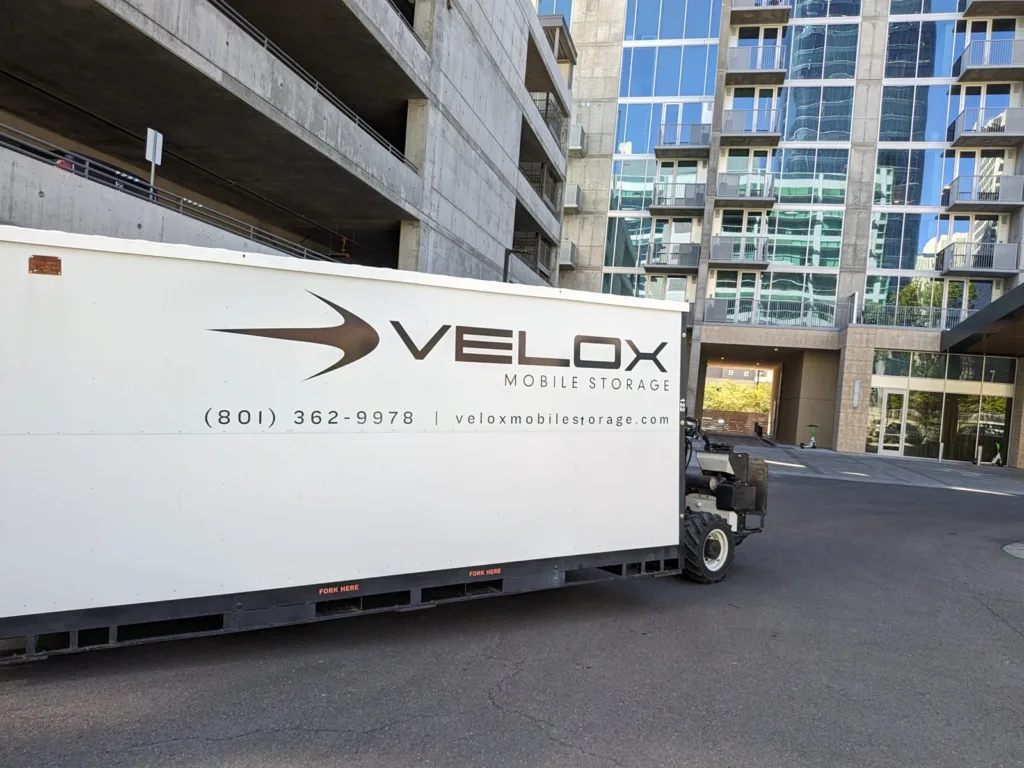
| Velox | Sets the container where the crew wants it, holds it at our yard if you need the driveway back, and brings it to the repaired house |
| You | Point out what matters most, keep your essentials with you, and tell us where the container can sit |
One small local team answers our phone. The person who scheduled the container can also answer your questions, add a second unit or move the pickup date. No ticket numbers.
What goes in the container (and what doesn’t)
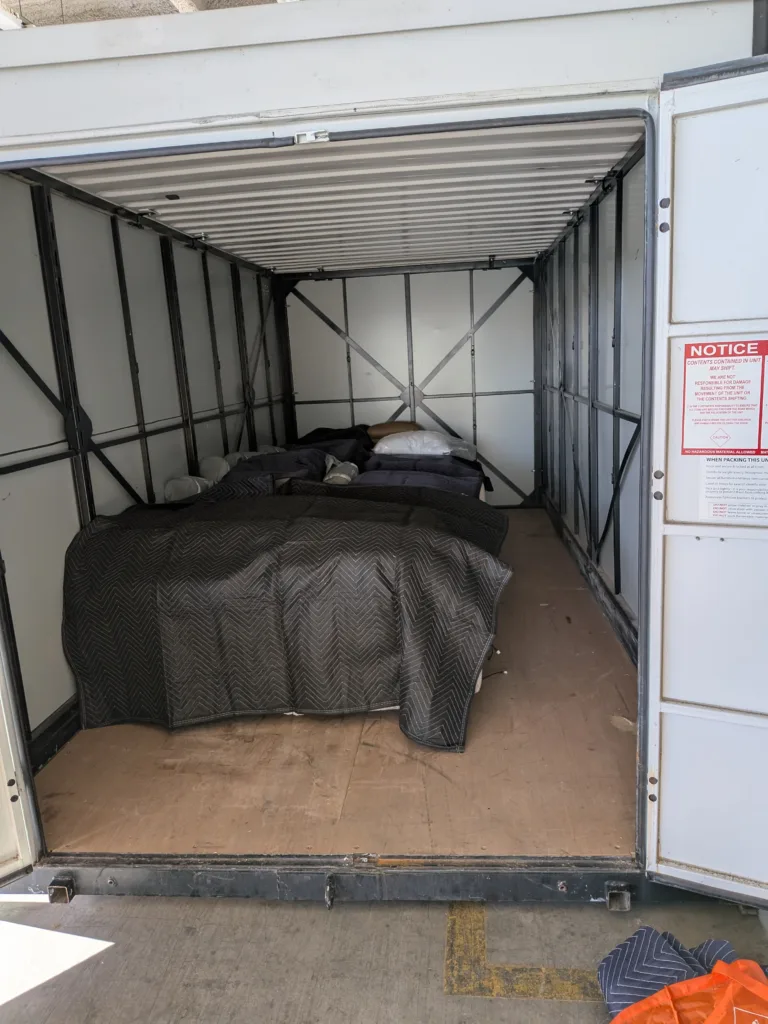
This part surprises people. A portable storage container is for clean, dry, undamaged belongings: the furniture and boxes from rooms the water or smoke didn’t reach, or things the restoration company has already cleaned. Wet, moldy or smoke-damaged items should never be sealed in a closed steel box. They go with the restoration company to be dried, cleaned or written off first. Locking damp things in a container is how a water problem turns into a mold problem.
Goes in the container
- Furniture and boxes from unaffected rooms
- Items the restoration company has cleaned and cleared
- Garage and basement things that stayed dry
Stays out
- Anything wet, moldy or smoke-damaged
- Food and other perishables
- Fuel, propane and chemicals
Keep with you
- Documents, medications and cash
- Jewelry and family photos
- Anything you couldn’t replace
Our containers are welded steel with sealed doors and roof, and they keep out normal rain and snow. They aren’t climate controlled, though, so paper, electronics, art and photos are better off in the restoration company’s climate-controlled storage. Our list of what not to store in a portable container has the full detail.
Who pays for the container?
On most of the water and fire jobs we work, the restoration company rents the container and bills it as part of the insurance claim. The homeowner usually doesn’t pay Velox anything directly. Pack-out and storage are often handled under the contents (personal property) part of a covered claim, but every policy is different and your adjuster makes the call. If you’re not sure, ask your restoration company before the pack-out starts.
If you rent from us yourself, for example to clear a room for a repair your insurance isn’t covering, our normal terms apply: no deposit, a one-month minimum and a monthly rate that doesn’t go up after the first month. Here’s how our pricing works.
How long a pack-out takes
Longer than most people expect. Drying, testing, repairs and claim approvals all take time, and contents often sit for weeks or months. That’s fine. The rental is month to month, so the container stays as long as the job does.
Keep it on site so the inventory team and the adjuster can open it whenever they need to. Or have us move it to our gated yard so you get your driveway back. Storing it at our yard adds nothing to the monthly rate, and you can visit by appointment. When the house is ready, we bring the container back to the repaired home, or to wherever you’ve landed in the meantime.
Your pack-out checklist
- Ask who is ordering the container and how it’s being billed.
- Take your own photos of every room before anything moves.
- Ask for a copy of the inventory the restoration company makes.
- Pull out your essentials: medications, documents, chargers and a few days of clothes.
- Tell us where the container can go. Text a photo of the driveway or street and say which door the crew will use. Our placement guide covers driveways, gravel and street spots.
- Clear the path of cars, low branches and wires.
Questions people ask
Does insurance pay for a storage container during a restoration?
Often, as part of a covered claim. On most of our water and fire jobs, the restoration company rents the container and bills it to the claim. Your adjuster decides what your policy covers.
Can water-damaged things go in the container?
No. Only clean, dry, undamaged belongings go in. Wet, moldy or smoke-damaged items go with the restoration company to be cleaned first.
How fast can a container get to a damaged house?
Next-day delivery is often possible, and same-day happens when the schedule allows. Restoration calls and loaded-container moves get priority on our schedule.
Can the adjuster get into the container?
Yes. On site, it can be opened whenever the inventory team or adjuster needs it. At our yard, access is by appointment.
Do you work directly with restoration companies?
Yes, across Utah and Colorado’s Front Range. Restoration companies can set up a direct line for their dispatch on our restoration and insurance partner page.
Need a container at a damaged house?
Call or text a photo of the driveway or street. A real person on our local team will tell you when we can get there.
Utah: (801) 362-9978 Colorado: (720) 674-8777 Get a free quote